A Seaweek Forum and what it says about the future of events
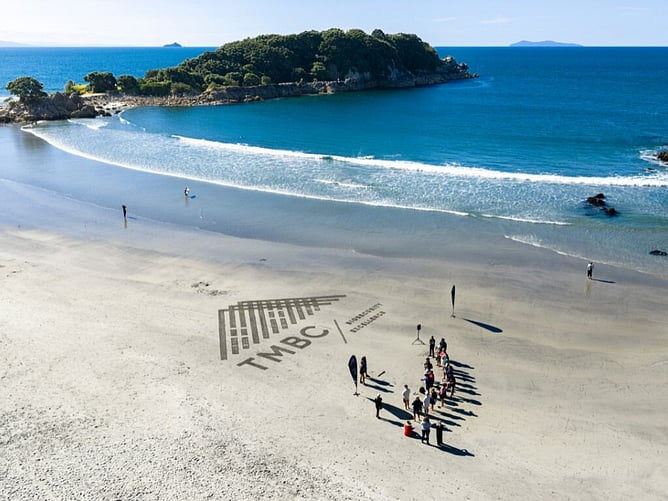
The sky was clear and blue, the ocean steady with gentle waves rolling toward the shoreline. There were no rows of chairs, no lectern, and no projector screen. Instead, participants stood together, feet in the sand, listening, reflecting, and eventually drawing sand art in the very landscape they were discussing.
This was the March Partners Forum for Tauranga Moana Biosecurity Capital (TMBC), delivered as part of Seaweek 2026.
What unfolded on the sand that evening demonstrated a practical example of how events are evolving in 2026.
Events are moving from information to experience
For decades, forums and stakeholder gatherings have followed a familiar format: a room, a stage, a lectern, and a sequence of presentations. While effective for sharing information, this structure often creates distance between the message and the audience.
The event industry is now moving in a different direction. At PomPom Events and Marketing, we see this as an opportunity to design events and communications that create genuine connections with the communities they serve.
As a global events report explains, “Events bring people together in ways no other medium can. They build trust, create shared experiences, and offer unmatched opportunities for engagement.” (Eventsair, 2026)
In other words, events are no longer just communication channels, they are shared experiences designed to create meaning.
For the TMBC forum, the kaupapa was clear: protecting the moana from biosecurity threats. Instead of discussing this indoors, the cheer squad at PomPom designed a gathering where the environment itself would become part of the conversation.
If the topic was the ocean, the ocean needed to be present.
Place-based event design
In recent years, location has become a central storytelling tool in event design. Rather than acting as a neutral backdrop, the venue itself reinforces the narrative of the event.
The golden beach at Mount Maunganui’s setting allowed the conversation about marine biosecurity to be grounded in place. Participants were not simply hearing about the ecosystem, they were standing within it.
Research increasingly points to this type of design as a powerful engagement tool. Experiential events that connect people with the environment and context create a deeper emotional connection and stronger recall. (ATN Event Staffing, 2026)
That evening, the rhythm of the waves and the view across the coastline became part of the forum’s atmosphere. The environment did what no presentation slide could replicate.
Participation instead of passive audiences
Another defining shift in modern events is the move from audiences to participants. Industry reports highlight that interactive activations and hands-on experiences are now becoming a cornerstone of event design, allowing attendees to actively contribute rather than passively observe. (Cater+Event, 2026)
One of the first things attendees noticed as they arrived on the beach was a large Tauranga Moana Biosecurity Capital logo, carefully etched into the sand. The artwork had been created earlier by Kenrick Smith of Rake Healing, who used traditional sand-raking techniques to transform the beach into a temporary canvas.
As the forum concluded, Kenrick invited participants to slow down, take a few quiet breaths, and reflect on the conversations they had heard. From there, attendees were encouraged to create their own sand art, exploring themes of biodiversity and collective protection.
What began as a single artwork gradually expanded into a collaborative landscape of patterns and ideas, shaped by many hands.
Even a brief moment of creating together shifted the dynamic of the event as attendees moved from passive listeners to active contributors.
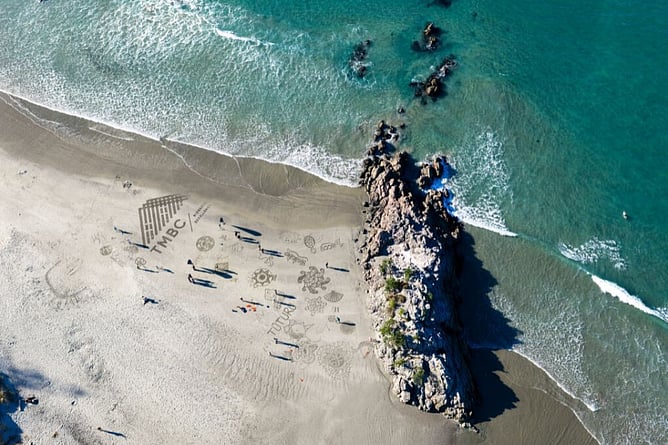
Quote: “It was fantastic to have our latest seaweek biosecurity forum on the beach, reflecting on how the invasive marine organisms we were hearing about could impact our ocean, our harbour and our beach, and reminding us what’s at stake and what we need to protect.” - Beccy Ganley, TMBC Co Chair
A quiet lesson in event design
Interestingly, the evening also demonstrated something counterintuitive about innovation in events.
In a time when the industry often emphasises immersive technology, AI-driven personalisation, and complex production, the TMBC forum succeeded through simplicity.
No screens. No stage. No elaborate set design. Just people, place, and purpose aligned.
A reminder
For our team, this event was a reminder that the most powerful events often emerge from a simple question:
“What experience will help people truly understand why this matters?”
In this case, the answer was not another conference room. It was the sand beneath people’s feet, the sound of waves in the background, and the shared understanding that the ocean in front of them was exactly what they were there to protect.
Sometimes, the most effective event design decision is simply choosing the right place to stand.
Our work with TMBC
The Seaweek March Partners Forum event for Tauranga Moana Biosecurity Capital, was designed and delivered by the team here at PomPom Events and Marketing. We provide ongoing marketing, communications, and event management for TMBC. Our work includes campaign messaging, digital communications, partner engagement, and event experiences that help grow awareness of biosecurity issues across the Bay of Plenty.